AI Future Possibilities 2027: What Work Can AI Do?

In 2027, AI shifts from chatting to doing: software agents will draft, code, reconcile, schedule and monitor work while people review and approve the results. This ProCraft.site guide explains which tasks and jobs AI can handle in 2027, where humans still lead, and how to prepare.
AI in 2027: Where We Stand at the End of 2026
Artificial intelligence has moved from novelty to infrastructure, and 2027 is the year that shift gets tested at scale. As of November 2026, most large organizations use AI somewhere in the business, and a majority have at least experimented with AI agents. Yet Rework's 2026 review of agentic AI adoption finds that no single business function has more than about 10% of organizations running agents at full scale. Adoption is broad, but scaling is narrow.
That gap is exactly why 2027 matters. Analysts expect experiments to turn into daily operations:
Key Points
- IDC forecasts that agentic automation will enhance more than 40% of enterprise applications by 2027.
- Deloitte projected that half of companies already using generative AI would run agent pilots by 2027.
- Gartner warns that over 40% of agentic AI projects may be canceled by 2027 because of rising costs and unclear business value.
Read together, these forecasts tell a balanced story. AI will do far more real work in 2027, but not every project will survive contact with budgets, security teams and customers. This guide explains what AI future possibilities in 2027 look like in practice: which tasks AI can handle, which industries change first, which jobs evolve, and how you can prepare.
One note on method. Every figure here is a forecast or a survey result from a named analyst or publisher, not a guarantee. Check the original research before citing any number elsewhere.
From Chatbots to AI Agents: The Biggest Shift of 2027
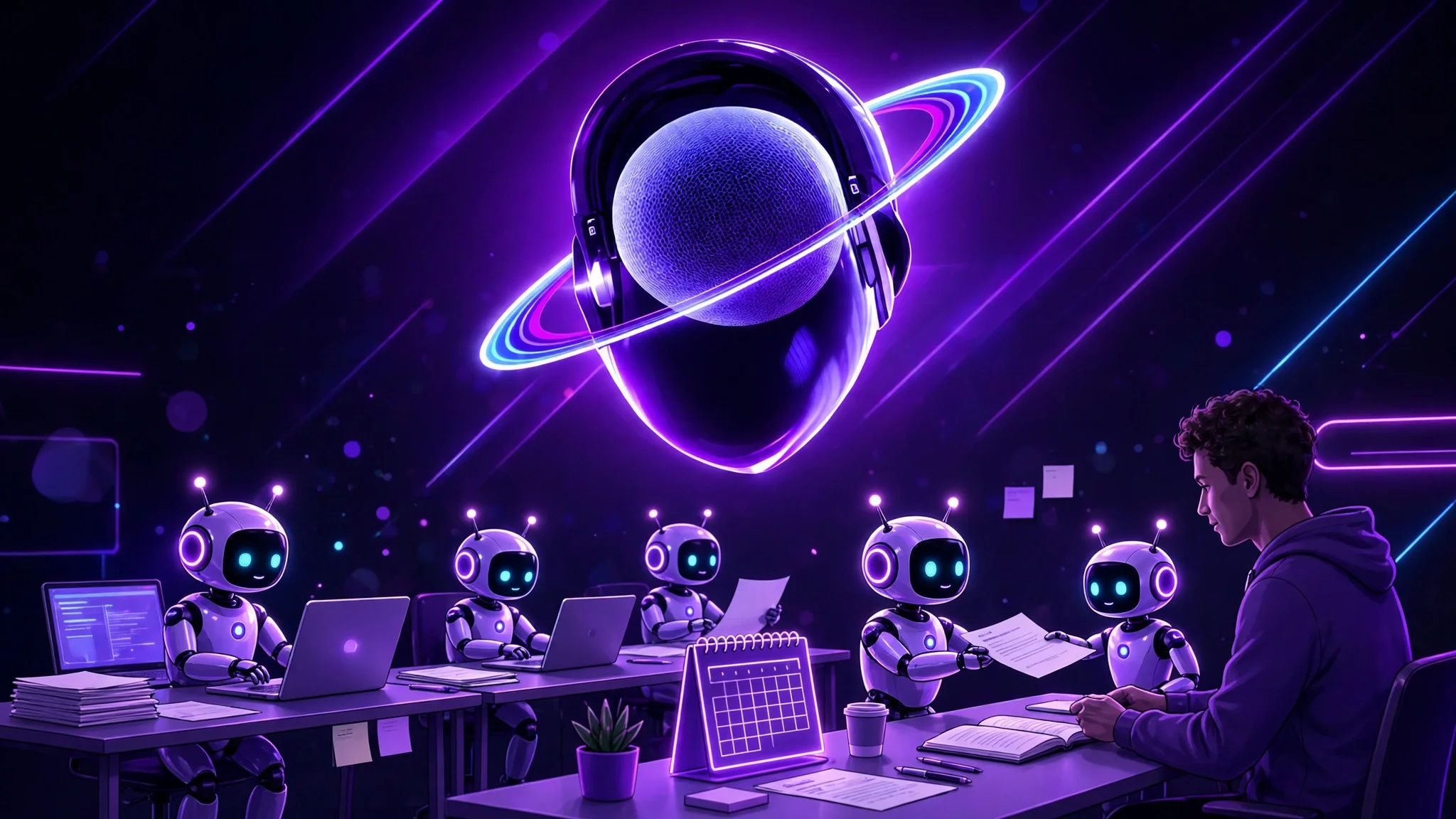
The defining change of 2027 is the move from chatbots that answer to agents that act. A chatbot waits for a question and returns text. An agent takes a goal, plans a sequence of steps, uses tools such as email, spreadsheets, calendars and databases, and hands the result back for review. StackAI's 2027 enterprise outlook expects these agentic workflows to replace standalone chatbots as the most valuable enterprise deployments.
Most organizations will not jump straight to full autonomy. A common model is a ladder of trust: assist, then supervise, then delegate. In the assist stage, AI drafts and prepares. In the supervise stage, it proposes actions and a person approves them. Only in the delegate stage does it act alone, and only on low-risk tasks.
Several building blocks make this possible in 2027:
Key Points
- Shared standards. Protocols such as the Model Context Protocol let agents connect to business tools in a consistent way, and G2 predicts the AI orchestration market will triple to more than $30 billion by 2027.
- Memory and continuity. Persistent agents remember past decisions, deadlines and preferences instead of starting from zero each time.
- Multimodal skills. Gartner estimates that 40% of generative AI solutions will be multimodal by 2027, meaning they work with text, images, audio and video together.
- Identity and access controls. One 2027 forecast from Digital Strategy AI argues that agent identity and AI-on-AI security will become mandatory once agents can touch real systems.
The practical test for 2027 is simple: what does a finished, accepted task cost? Founder-focused forecasts from MEAN CEO say agents will be judged on the real cost of a completed task, not on demo polish.
What Work Can AI Do in 2027? A Quick Overview
In 2027, AI can reliably handle drafting, summarizing, coding assistance, triage and routine multi-step workflows, while people keep goal-setting, judgment and accountability. The overview below is our assessment based on the trends in this guide, not a measured benchmark.
Key Points
- Writing and content: AI can draft articles, emails, scripts, product descriptions and translations in 2027, while humans stay in charge of strategy, facts, brand voice and final approval.
- Software development: AI can generate code, write tests, fix bugs and review pull requests, while humans stay in charge of architecture, security and product decisions.
- Customer support: AI can resolve routine tickets, triage, summarize cases and draft replies, while humans stay in charge of complex or emotional cases and escalations.
- Data analysis: AI can clean data, build dashboards and explain trends in plain language, while humans stay in charge of choosing the question and judging business impact.
- Admin and scheduling: AI can manage calendars, file documents and extract data from forms, while humans stay in charge of priorities, exceptions and confidential matters.
- Research: AI can search, compare sources and summarize long reports, while humans stay in charge of verifying claims and drawing conclusions.
- Design and media: AI can create images, layouts, short video and voiceovers, while humans stay in charge of creative direction, originality and taste.
- Finance and compliance: AI can reconcile transactions, flag anomalies and prepare reports, while humans stay in charge of audit sign-off and policy decisions.
- Healthcare paperwork: AI can transcribe visits, code claims and schedule follow-ups, while humans stay in charge of diagnosis, treatment and patient relationships.
- Education: AI can tutor, grade routine work and personalize practice, while humans stay in charge of mentoring, motivation and assessment integrity.
- Logistics: AI can plan routes, forecast demand and monitor inventory, while humans stay in charge of crisis decisions and supplier relationships.
- Physical work: AI can assist in warehouses, factories and hospitals through robots, while humans stay in charge of safety, complex dexterity and oversight.
The sections below take each area in turn.
AI for Content Creation, Marketing and Design
Content is where AI is already strongest, and in 2027 it becomes a full production line. Writers, marketers and designers will work with systems that research a topic, draft an outline, produce a first version, create matching images and publish across channels after a human approves.
What AI can do in 2027
Key Points
- Draft blog posts, newsletters, ad copy, product pages and social captions in a defined brand voice.
- Repurpose one long article into a video script, a thread, an email and a podcast outline.
- Translate and localize content into dozens of languages with consistent terminology.
- Generate images, layouts, short videos and voiceovers from a written brief.
- Run A/B tests, read the results and suggest the next variation.
- Monitor search trends and propose topics, a task that fits SEO teams well.
What stays human
Original reporting, personal experience, humor, taste and trust still set great content apart. Generic AI text will blend into the noise, so first-hand knowledge and accuracy are the best defense. The winning workflow in 2027 is AI for speed and structure, and humans for insight and accuracy.
Transparency rules also matter. The EU AI Act's transparency obligations for AI-generated content began applying in August 2026, with machine-readable watermarking for existing systems extended to December 2026. Marketers who publish AI-generated images or video in Europe should label them clearly.
Build better prompts. Good output starts with good instructions. Browse the ProCraft.site prompt library for ready-made content prompts, then test and refine your own in the ProCraft.site AI prompt studio.
Tip for ProCraft.site readers: build a style guide and a fact-checking step into every AI content workflow. Cheap drafts are only an advantage if quality control keeps up.
AI in Software Development and IT Operations
Software is one of the clearest examples of AI doing real work, and 2027 pushes it from autocomplete to delegated tasks. Developers increasingly describe a feature or a bug, then review a pull request that an AI agent prepared, tested and documented.
Tasks AI can handle
Key Points
- Generate boilerplate code, database queries, scripts and API integrations.
- Write unit tests, find edge cases and fix failing builds.
- Review code for bugs and style problems before a human looks at it.
- Migrate legacy code to newer frameworks and update documentation.
- Triage incidents, read logs, suggest root causes and draft postmortems.
- Automate routine cloud, deployment and monitoring chores.
Where humans lead
System design, trade-offs, security judgment and product thinking remain human work. Agents that can run commands and touch production systems also raise new risks. A 2027 forecast from Digital Strategy AI expects agents that hack, or get hacked, to force new rules on access control, and the same forecast looks at what AI means for junior hiring. Teams should give agents the least access they need, log every action, and keep human approval on deployments.
The skills that gain value are reading code critically, writing precise specifications and testing. Writing precise specifications is largely a prompting skill, and the ProCraft.site prompt engineering guide is a good place to practice it. A junior developer who can supervise AI output and explain why it is right or wrong will be more employable than one who only types code. For non-developers, 2027 also brings more no-code and low-code building, where a marketer or accountant can describe a small tool and get a working draft.
AI in Customer Support, Sales and Business Operations
Customer-facing work will see some of the most visible AI in 2027. Support teams already use bots for simple questions; agents extend that to completing actions such as issuing a refund, changing a booking or updating an account.
What AI can do
Key Points
- Resolve routine tickets end to end and route hard cases with a summary attached.
- Draft replies in the right tone and language, then learn from agent edits.
- Qualify leads, enrich contact data, schedule meetings and write follow-ups.
- Prepare account briefings before a sales call from CRM notes and news.
- Forecast demand, flag churn risk and recommend next actions.
- Run back-office workflows such as onboarding, procurement requests and vendor emails.
A caution on customer trust
Not every customer wants a bot in front. One founder-focused forecast from MEAN CEO cites a finding that only 19% of customers want AI agents as their main channel with a brand. The lesson is to make the human option easy and to measure results by completed, accepted tasks rather than by deflection rates.
Agent-to-agent commerce is also arriving. The same source says analysts forecast card-network dispute rules for purchases made by AI agents, and a US state law that would force businesses to accept cancellations from AI agents. Another 2027 outlook, from CallSphere, expects the first agent-to-agent transactions in procurement to reach meaningful volume by mid-2027. Treat these as forecasts, but small businesses should check that their policies still work when the customer is a piece of software.
To compare support and sales automation tools, browse the ProCraft.site AI directory.
AI in Finance, Accounting, Legal and Administrative Work
Rule-based, document-heavy work is the natural home for AI, which is why finance, legal and administration feel some of the biggest changes in 2027.
Finance and accounting. AI can match invoices to purchase orders, categorize transactions, reconcile accounts, draft management commentary and flag unusual payments for review. One industry roundup notes that financial institutions are projected to double their AI spending by 2027. Fraud detection and credit risk analysis keep improving, though final decisions that affect customers will need human review.
Legal and compliance. Systems can review contracts for missing clauses, compare versions, summarize case files and monitor regulatory changes. Lawyers still own advice, strategy and accountability. Compliance itself is a growing workload: Gartner predicts enterprises will invest $5 billion in compliance efforts by 2027.
Administration. Scheduling, expense reports, form processing, document filing and meeting notes are all automatable. The World Economic Forum's 2023 Future of Jobs report projected about 26 million fewer record-keeping and administrative jobs by 2027, with data entry clerks and executive secretaries seeing the steepest losses.
The pattern is the same across all three areas: AI handles the volume, and people handle exceptions, approvals and relationships. Professionals who learn to supervise automated workflows, check outputs and explain decisions to clients are more likely to move up the value chain than out of it.
This section is general information, not financial or legal advice.
AI in Healthcare and Life Sciences
Healthcare is expected to be among the most transformed sectors. In the IEEE global study, 37% of technologists ranked healthcare in their top three industries transformed by AI, and 23% named faster disease mapping and drug discovery among the most impactful use cases.
Where AI helps most in 2027
Key Points
- Paperwork first. Documentation, scheduling and claims processing are the biggest early wins. A survey summarized by Vention found that 57% of healthcare organizations see reducing administrative burden as the top opportunity.
- Imaging and diagnostic support. AI can flag suspicious scans and prioritize urgent cases for specialists.
- Remote monitoring. Wearables and home devices feed AI that spots early warning signs and alerts clinicians.
- Drug discovery. Models help screen molecules and predict how compounds behave, shortening early research.
- Robotics. Surgical and hospital robots add precision and take over routine logistics.
Market analysts expect strong growth. Grand View Research projects that the AI in healthcare market will exceed $187 billion by 2030, up from about $26.6 billion in 2024.
Limits and safeguards. Diagnosis and treatment decisions need clinicians, informed consent and clear accountability. Under the EU AI Act, AI used in areas such as employment, education and access to essential services is classed as high-risk, and AI built into regulated products follows in August 2028. Hospitals should keep humans in the loop, test models on local patient populations and protect patient data.
This section is general information, not medical advice.
AI in Education and Training
Education is moving from AI as an experiment to AI as a core part of how institutions operate. The OECD Digital Education Outlook 2026 is described as showing that generative AI can improve learning when it augments teachers and tutors rather than replacing them.
What AI can do in 2027
Key Points
- Act as a patient one-to-one tutor that adapts explanations, pace and practice to each learner.
- Give instant feedback on drafts, code and problem sets.
- Draft lesson plans, quizzes and worksheets for teachers to edit.
- Support administrators with scheduling, enrollment questions and study-advisor tasks.
- Help adult learners and employees reskill with personalized training paths.
In the IEEE global study, 29% of technologists expected customized learning, intelligent tutoring and university chatbots to be the most common AI uses in education. Grand View Research estimates the AI in education market at $5.88 billion in 2024, rising to about $32.27 billion by 2030, as reported in a 2026 industry roundup.
Challenges. Cheating, over-reliance, bias and privacy are real concerns. Education is also named as a high-risk area in the EU AI Act, so systems that score or place students will face stricter requirements from December 2027. The best schools will teach AI literacy: how to prompt, check sources, and know when not to use AI. Teachers remain essential for motivation, mentoring and judgment.
AI in Manufacturing, Logistics, Robotics and Physical AI
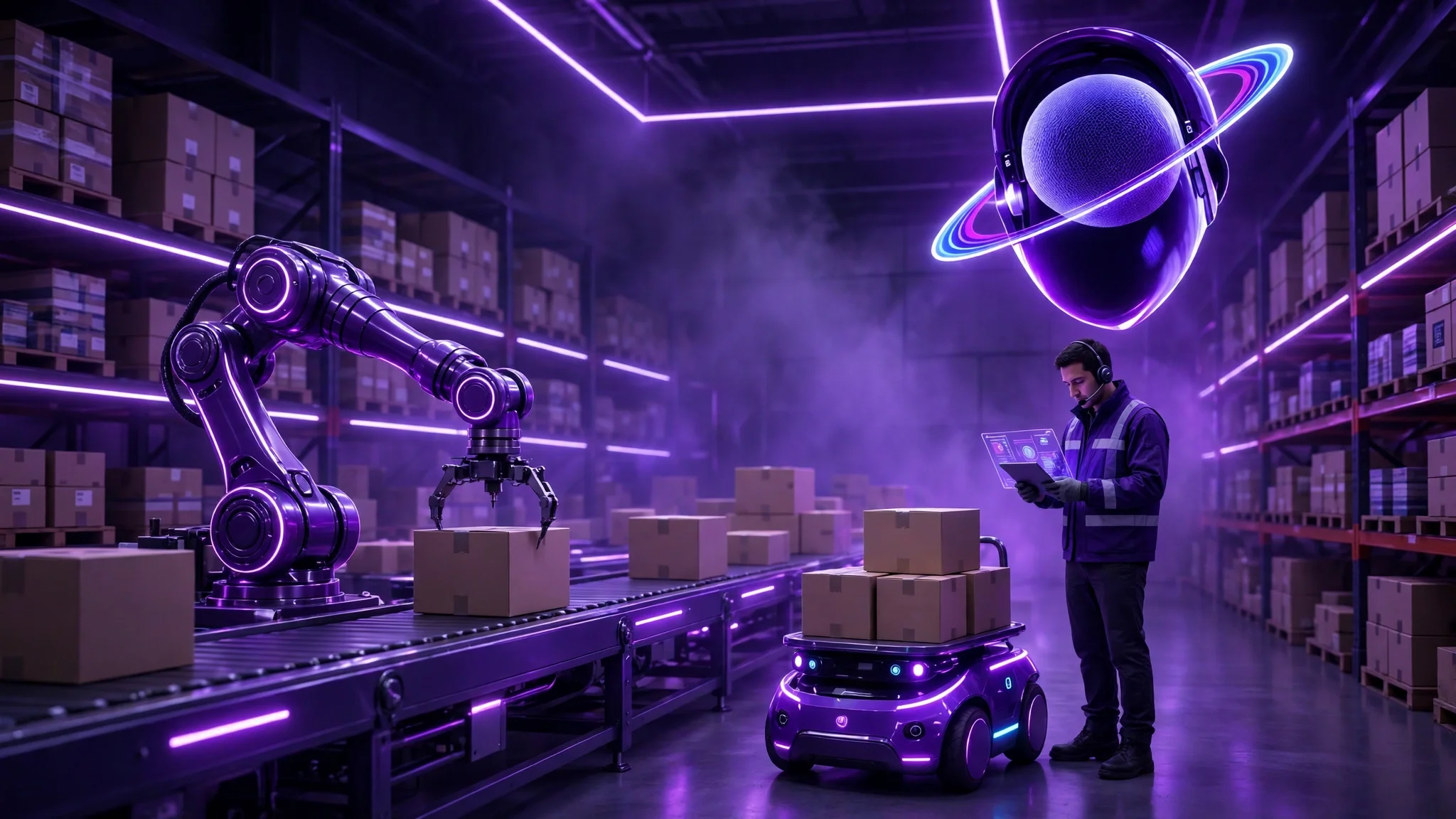
AI is leaving the screen. In 2027, more of it will move, lift, inspect and deliver. Deloitte's State of AI in the Enterprise survey found that 58% of respondents already use physical AI to some extent, with adoption projected to reach 80% within two years.
Likely applications in 2027
Key Points
- Predictive maintenance. Sensors and models spot failing machines before they stop a production line.
- Quality inspection. Computer vision checks products faster and more consistently than manual sampling.
- Warehouse and delivery logistics. AI plans routes, forecasts demand and coordinates robots in fulfillment centers.
- Collaborative robots. Robots handle repetitive or heavy tasks next to people, guided by natural-language instructions.
- Energy and infrastructure. AI balances loads, optimizes usage and monitors equipment.
In the IEEE study, 52% of technologists expected robotics to be the area most influenced by AI in 2026. Embodied AI is also a national priority: one report notes that China is investing heavily in a secure supply chain for embodied AI by 2027, and that OpenAI is working with designer Jony Ive on a consumer device anticipated for 2027.
Edge computing supports this shift. Gartner predicts that 50% of critical enterprise applications will run outside centralized public clouds by 2027, which helps robots and devices react in real time.
Physical work remains harder than digital work. Dexterity, safety certification and cost slow deployment, so expect gradual rollout in controlled environments such as warehouses and factories before homes.
Jobs and Skills: How AI Changes Work in 2027
AI in 2027 is more likely to change tasks than to erase whole professions overnight, but the churn is real. The World Economic Forum's Future of Jobs Report 2023, based on a survey of more than 800 companies, expected 69 million new jobs and 83 million eliminated by 2027, a net loss of 14 million or 2% of current employment. The same research expects 23% of jobs to change through AI, automation and economic shifts. Note that the report covered many forces, such as slower economic growth and the green transition, not only AI.
Roles likely to grow
Key Points
- AI and machine learning specialists, data analysts and scientists, and cybersecurity experts, which WEF expected to grow about 30% on average by 2027.
- AI operations roles: people who design, supervise, test and audit agents.
- Roles built on human trust: nurses, teachers, counselors, skilled trades and care workers.
Roles under pressure
Key Points
- Data entry, record-keeping and routine administration.
- Bank tellers, postal clerks, cashiers and ticket clerks, which WEF listed among the fastest-declining roles.
- Entry-level tasks in writing, coding, translation and customer support, where AI handles the easiest work first.
Some AI leaders have predicted far larger disruption, including claims that up to half of jobs could be displaced. Those claims are contested, and the company-survey data above shows a more mixed picture in which AI also creates roles.
Skills that hold their value
Key Points
- 01Analytical and creative thinking, which employers in the WEF survey ranked as their top reskilling priorities.
- 02AI literacy: prompting, checking outputs and knowing the limits.
- 03Domain expertise, because AI is only as useful as the person who can judge its output.
- 04Communication, leadership and empathy.
- 05Continuous learning, since tools will keep changing.
What AI Still Cannot Do Well in 2027
Understanding the limits is as important as knowing the possibilities. Even in 2027, AI will struggle with several kinds of work:
Key Points
- Guaranteed accuracy. AI can still produce confident mistakes, so facts, numbers, legal citations and medical details need verification.
- Accountability. A model cannot be held responsible. A person or organization must own every consequential decision.
- Deep empathy and trust. Caring for a patient, negotiating a hard deal or coaching a team depends on human relationships.
- Judgment in unclear situations. Agents work best with clear goals, good data and defined rules. Ambiguity, ethics and politics remain human territory.
- Fine physical dexterity. Robots are improving, but unstructured real-world tasks remain expensive and error-prone.
- Original lived experience. AI can remix existing material, but it has no first-hand experience to draw on.
Business reality adds more friction. Gartner's warning that over 40% of agentic AI projects may be abandoned by 2027 reflects rising costs and teams chasing novelty over measurable outcomes. StackAI notes that latency is also a business constraint: a workflow that takes 25 seconds end to end can fail user adoption even when it is accurate. Security is another barrier, since agents with access to email, files and payment tools become attractive targets.
The practical conclusion is that 2027 AI is best treated as a capable, fast and sometimes unreliable junior colleague: excellent at volume and first drafts, and in need of supervision, clear instructions and review.
AI Regulation, Safety and Trust in 2027
Rules will shape what AI is allowed to do in 2027. The biggest example is the EU AI Act, whose timeline changed in 2026. The Digital Omnibus on AI, adopted by the European Parliament on 16 June 2026 and given final Council approval on 29 June 2026, pushed back several high-risk deadlines.
Key Points
- 2 August 2026: Most of the Act applies and enforcement begins, including the Article 50 transparency obligations.
- 2 December 2026: Extended date for machine-readable watermarking on existing systems.
- 2 December 2027: High-risk obligations for standalone Annex III systems, such as AI used in employment, education, credit scoring and law enforcement.
- 2 August 2028: High-risk obligations for AI embedded in regulated products.
Dates are drawn from FPF, Jaggaer and Learn Signal. Some older articles still show August 2026 for high-risk rules, so check the date of any source you rely on.
Analysts describe the change as a postponement, not a deletion: the risk tiers and core obligations remain. Fines for non-compliance with high-risk rules can reach up to 15 million euros or 3% of global annual turnover, whichever is higher.
Outside Europe the picture is more fragmented, and Gartner expects that enterprises will invest $5 billion in compliance efforts by 2027. For businesses, the lesson is to document AI systems, classify their risk, keep humans in the loop and label AI-generated content. Trust will be a competitive advantage, and G2 predicts a new category of third-party guardrails for AI agents.
This section is general information, not legal advice.
How to Prepare for AI in 2027: A Practical Plan
Preparation does not need a big budget. It needs a clear view of your tasks, a few well-chosen tools and good habits.
For individuals
Key Points
- 01Audit your tasks. List what you do in a typical week and mark which parts are repetitive, text-based or rules-based. Those are the first to be automated.
- 02Learn two or three AI tools deeply. Aim for real workflow fluency rather than trying every new app.
- 03Build verification habits. Check facts, numbers, links and sources before anything leaves your desk.
- 04Strengthen human skills. Communication, negotiation, leadership and domain expertise are harder to automate.
- 05Show your results. Keep a portfolio of projects where AI helped you deliver faster or better work.
- 06Keep learning. Set aside a few hours each week to test new tools and techniques.
For businesses
Key Points
- 01Start where returns are clear. Pick high-volume, low-risk workflows such as support triage, document processing and reporting.
- 02Measure cost per completed task. Judge agents by accepted outcomes, not demos.
- 03Use the autonomy ladder. Move from assist to supervise to delegate only when error rates are proven low.
- 04Set guardrails. Give agents limited access, log their actions and require approval for payments and deployments.
- 05Train your team. AI literacy is now a basic workplace skill.
- 06Plan for regulation. Inventory your AI systems and map them to EU AI Act risk categories before December 2027.
- 07Protect your data. Decide what can and cannot be sent to external AI services.
Small business tip. A single well-chosen agent that handles invoice follow-ups or customer FAQs can free several hours a week. Start small, measure the results, and expand only what works.
Frequently Asked Questions About AI in 2027
Will AI take my job in 2027?
Most likely AI will change parts of your job before it replaces the whole job. Routine, text-based and data-entry tasks are the most exposed, while roles built on trust, physical presence and complex judgment are safer. The WEF survey expected both job losses and job creation by 2027. Learning to work with AI is your best protection.
What is an AI agent?
An AI agent is software that takes a goal, plans steps, uses tools such as email or spreadsheets, and completes tasks with limited supervision, usually with human approval on important actions.
Which industries will AI change most by 2027?
Software, finance, customer service, marketing, healthcare administration, education and logistics are leading candidates, according to the studies cited in this guide.
Can AI replace doctors, lawyers or teachers?
No. AI can assist with paperwork, research, drafting and personalized practice, but professionals provide judgment, accountability and human connection. Regulated fields also require human oversight.
Will AI reach human-level intelligence in 2027?
Nobody can promise that. Forecasts differ widely, and current systems are powerful but uneven: strong at some tasks and unreliable at others. Plan for useful automation, not for science-fiction milestones.
How can small businesses use AI in 2027?
Start with customer FAQs, invoice reminders, content drafting, scheduling and reporting. Track time saved and errors, keep a human reviewer, and avoid sharing sensitive data with tools you do not trust.
What AI regulations matter in 2027?
The EU AI Act's high-risk rules for standalone systems apply from 2 December 2027, and transparency rules for AI-generated content already apply from August 2026.
What AI skills should I learn first?
Prompting, verifying outputs, data basics, and one domain skill that you can pair with AI.
Conclusion: AI in 2027 Is About Doing, Not Just Chatting
The AI future possibilities for 2027 come down to one idea: AI becomes a coworker that does tasks, not only a tool that answers questions. It will draft and design content, write and test code, resolve routine support tickets, reconcile accounts, summarize patient visits, tutor students and guide robots through warehouses. At the same time, forecasts warn that many agent projects will fail, regulation will tighten and trust will decide who wins.
The best response is neither fear nor hype. Learn the tools, check the outputs, protect your data and double down on the skills machines lack: judgment, creativity, empathy and accountability. People and organizations that start now, with small and measurable projects, will be ready when 2027 arrives.
Stay with ProCraft.site for more practical guides on AI tools, workflows and digital skills.
Explore ProCraft
Key Points
- Browse the free prompt library for ready-made prompts to use with AI agents and tools.
- Find tools in the AI directory.
- Try prompts hands-on in the AI prompt studio.
- Learn the basics in our prompt engineering guide.
- Back to ProCraft home.
Sources
Figures are from the reports below as of 12 November 2026. Several are secondary reports of analyst forecasts, so check the original research before citing it elsewhere.
Key Points
- Agentic AI in 2026: Trends and What Comes Next (Rework)
- AI Agent Adoption in 2026: What the Data Shows (Joget, citing IDC and Deloitte)
- Deloitte Global's Predictions Projects 50% Enterprise Adoption of GenAI Agents by 2027 (eWeek)
- AI in 2026: Predictions, Trends and Industry Forecast (Digital Applied)
- Enterprise AI Predictions for 2027 (StackAI)
- AI Predictions 2027: 10 Trends That Matter for Business (Digital Strategy AI)
- AI Agent Predictions 2027 (MEAN CEO)
- The 2027 AI Agent Landscape: 10 Predictions (CallSphere)
- 5 Bold Predictions on the Rise of Agentic AI (G2)
- 5 CIO Predictions for AI in 2026 (CIO Dive)
- Latest Trends Influencing the Future of AI in 2026 (MobileAppDaily)
- Top AI Trends (MobileAppDaily)
- Tech Forecasting for 2026-2030 (StartUs Insights)
- UK Healthcare Leads AI Transformation (IEEE global study coverage)
- AI Trends Across Industries, April 2026 (Mixflow)
- The AI Horizon: Emerging Technologies in 2026-2027 and Educational Impact (Mixflow)
- WEF Future of Jobs Report 2023 (coverage by KTVZ, Allwork.Space, Free Press Journal, FM Magazine)
- AI Job Loss (AIMultiple)
- The AI Act Implementation Timeline: What Changes Under the AI Omnibus (FPF)
- EU AI Act Compliance Deadlines (Jaggaer)
- EU AI Act High-Risk Rules Now Apply From December 2027 (Learn Signal)
- EU AI Act Effective Dates 2024-2027 (Legiscope)
- The EU AI Act's Deadline Moved to 2027 (Holistic AI)
- EU AI Act Council Final Adoption (Enterprise DNA)
- GenAI and Agentic AI 2026-2028 (Gaurav Aggarwal, Medium)
Explore More Tested Prompts & AI Workflows
Browse 6,800+ copy-ready AI prompts and 5,000+ curated AI tools on ProCraft.